What is it?
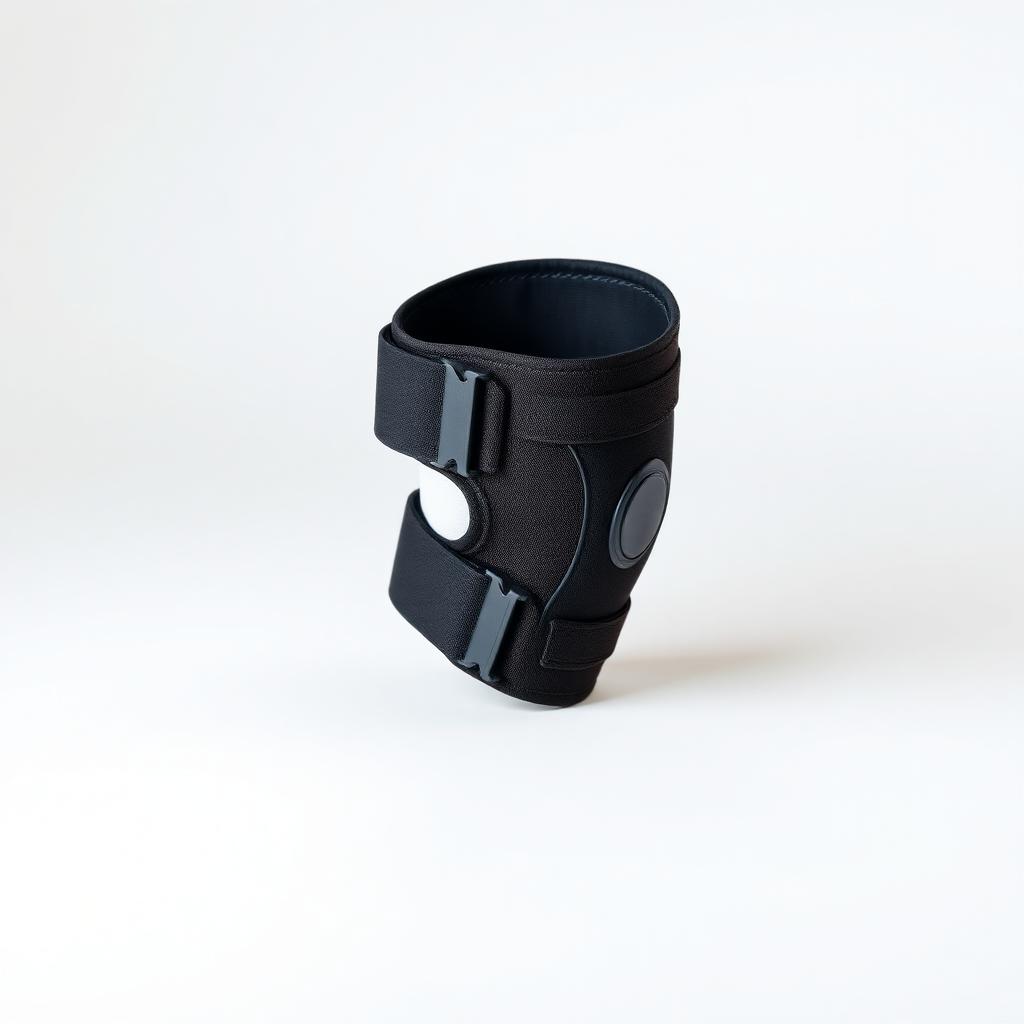
The knee brace provides ligamentary and proprioceptive stabilisation. Depending on the pathology it can be elastic (support only) or hinged with lateral reinforcements.
Common indications
- Medial or lateral collateral ligament sprain
- Conservatively-treated meniscal tear
- Symptomatic femoro-tibial osteoarthritis
- Return to sport after rehabilitation
Consultation & fitting
The model is chosen after examining the knee and, when needed, reviewing MRI imaging; fit is checked standing and walking.
Reimbursement in Belgium
In Belgium, coverage of braces and small orthopaedic equipment rests on two pillars: statutory health insurance (through INAMI/RIZIV and your health insurance fund) and the complementary insurance run by each fund.
- A medical prescription is almost always required. It states the indication and the type of device.
- INAMI/RIZIV (nomenclature of health services) sets the portion reimbursed by statutory insurance, under conditions (indication, prescriber, renewal timing).
- Your health insurance fund — Christian Mutualities, Solidaris, Liberal Mutuality, Partenamut, Neutral, and others — pays the statutory contribution and often an additional amount via the complementary insurance.
- The Increased Reimbursement status (BIM/OMNIO) gives you a higher reimbursement rate.
- The Maximum Billing cap (MAF) limits your annual health expenses depending on household income.
The exact reimbursed amount depends on the current INAMI/RIZIV nomenclature, the prescribed device and your health insurance fund. We provide a detailed invoice to forward to your fund.
Bring to your appointment
- The medical prescription
- Your health-fund stickers (‘vignettes’)
- Photo ID
- Recent imaging if available (X-ray, MRI, ultrasound)
When to seek urgent care
In case of severe pain, numbness, bluish discolouration or inability to move the limb, remove the device and seek prompt care. For a life-threatening emergency, call 112.